Hydraulic Elevator Pulley
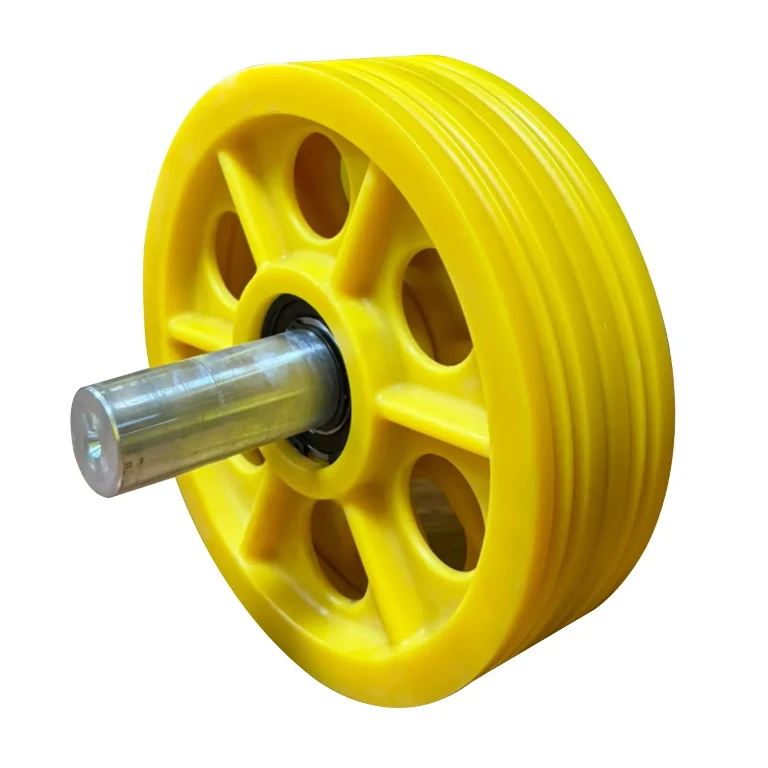
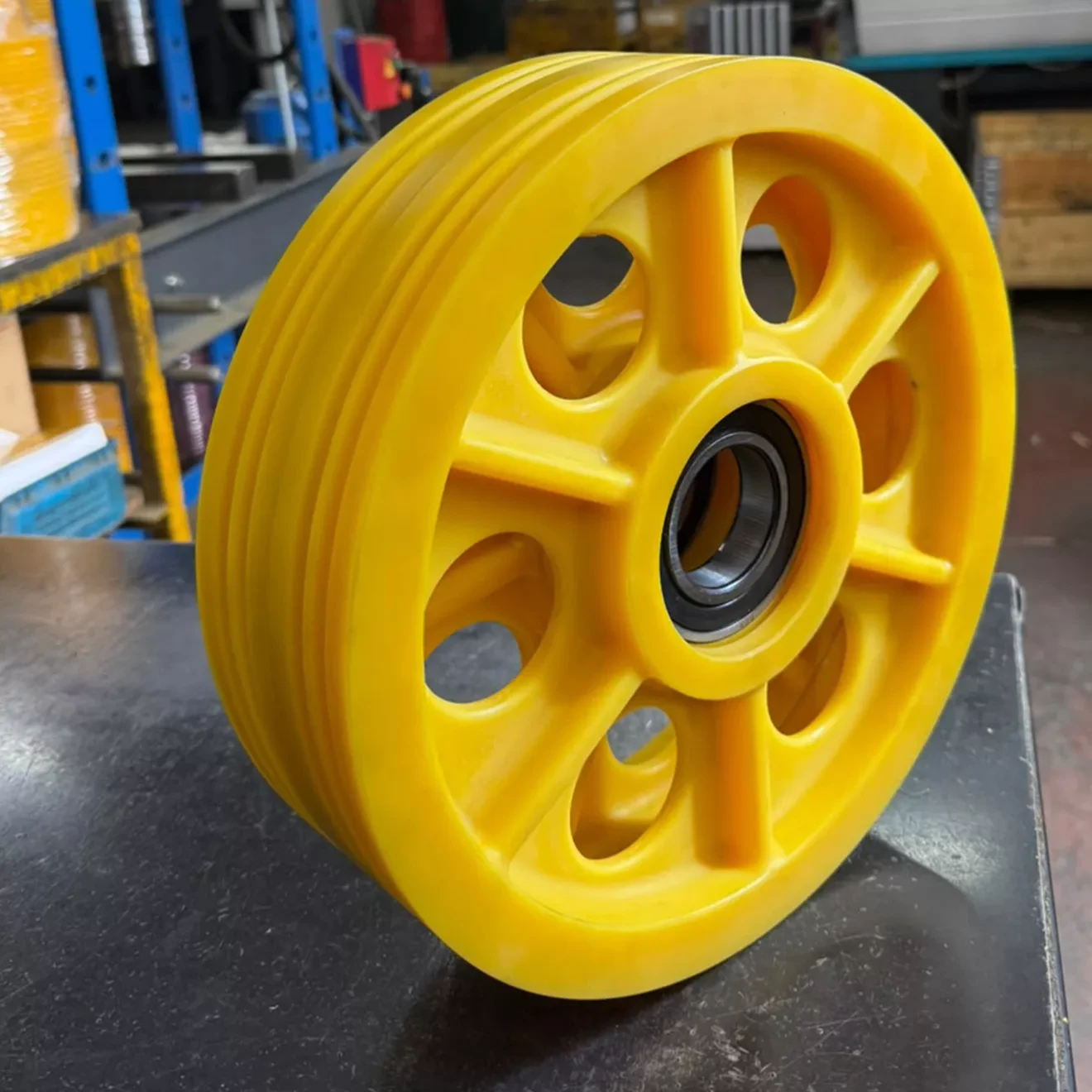
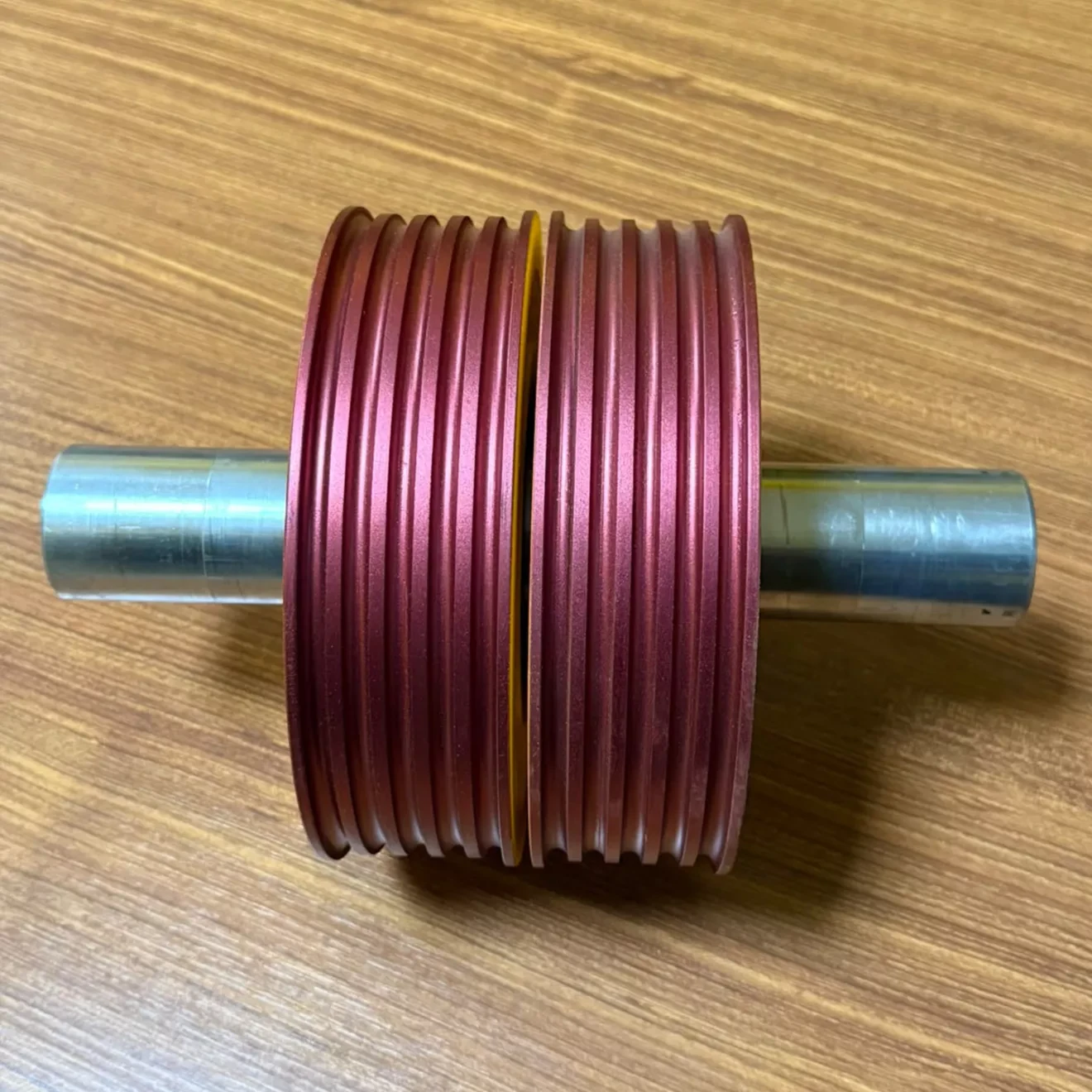
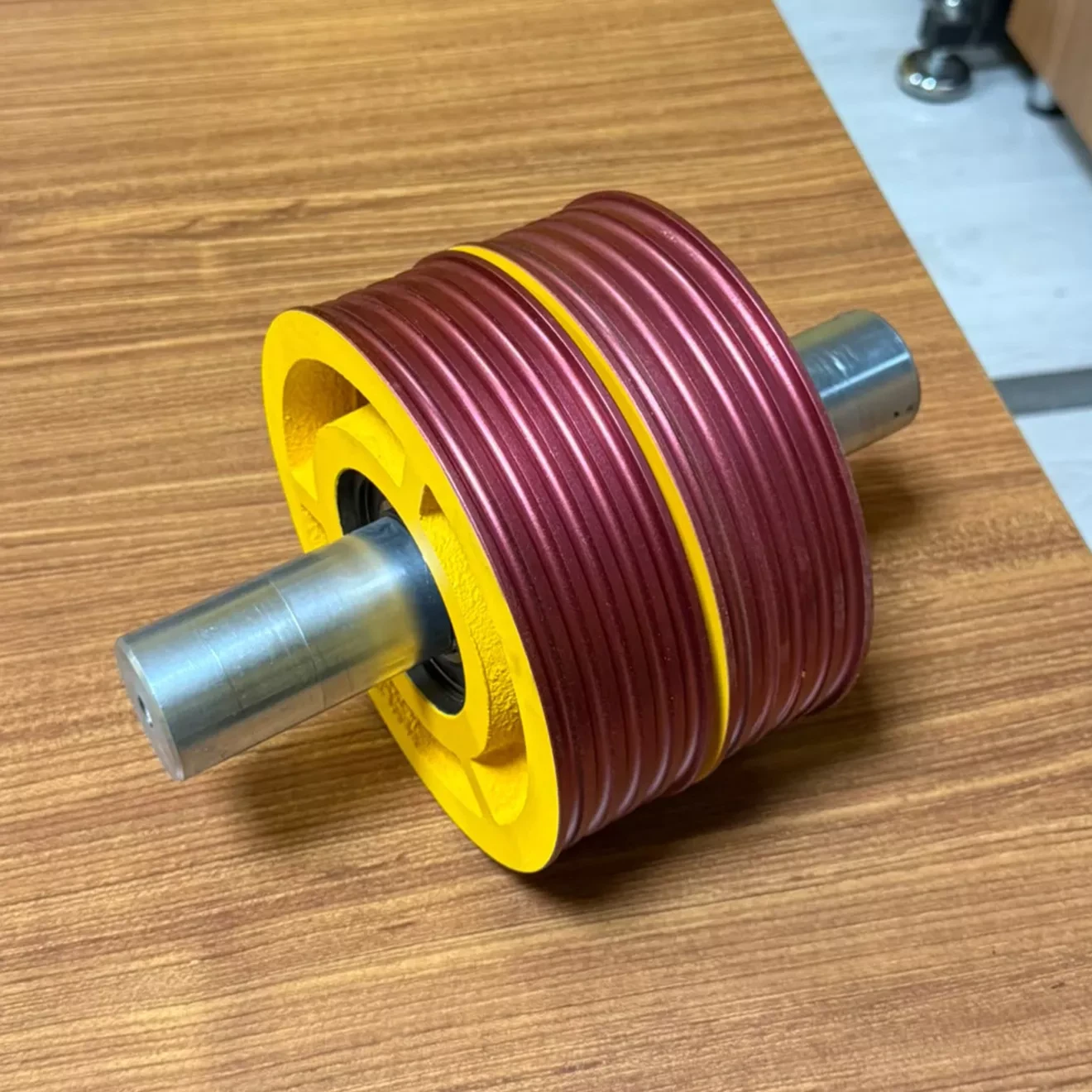
Next-Generation Hydraulic Drive Technologies: Professional Pulley Solutions for High Capacity and Maximum Safety
Hydraulic elevator systems hold a highly important place in the vertical transportation needs of modern architecture and industrial facilities, thanks to their high lifting capacity, quiet operating principles, and energy efficiency. In hydraulic drive mechanisms, the hydraulic fluid pressure generated by the motor and pump assembly is converted into linear force by means of a cylinder. However, the true hidden heroes that ensure this force is transferred to the elevator car without loss, vibration, or safety risks are the hydraulic pulley systems.
Load distribution in hydraulic drive units differs considerably from that of conventional traction-based systems. In these systems, the pulley does not directly transmit the motor's rotational movement; instead, it serves as a guiding and redirecting element that directs the lifting force generated by the piston to the car through ropes or special belts. During this critical redirection, the radial and axial loads placed on the pulley are much higher than those on standard pulleys. At Artı Kasnak, with more than a quarter century of manufacturing experience and our advanced R&D infrastructure, we manufacture next-generation hydraulic pulleys with high strength that fully adapt to the demanding operating characteristics of hydraulic elevators.
An Approach Beyond Standard Molds: Project-Specific Manufacturing Process
One of the biggest mistakes in industrial manufacturing is attempting to provide solutions for every elevator shaft and every load profile with "standard package" products. At Artı Kasnak, the core of our manufacturing philosophy is "Boutique Engineering and Flexible Manufacturing". The shaft structure, travel distance, piston placement, and load capacity of every hydraulic elevator project are completely different from one another. For this reason, our processes never begin by simply delivering an off-the-shelf product.
Our engineering department subjects the raw data for your project—such as the elevator's total rated load, frame weight, operating speed, number of ropes, and rope diameter—to a comprehensive analysis. Based on these analyses, the pulley diameter, shaft dimensions, and groove geometry best suited to the system's 1:1 or 1:2 operating mechanism are designed from scratch. After the designs simulated using advanced CAD/CAM software take shape in our foundry, they are machined on our high-precision CNC machines with micron-level tolerances. This prevents all potential incompatibilities that may arise on-site during installation, while transforming the system's theoretically calculated efficiency values into practical performance in the field.
Strong Infrastructure and Flawless Craftsmanship: The Building Blocks of Our Manufacturing Process
The quality of a hydraulic pulley depends on the meticulous management of every process, from the moment the raw material enters the casting furnace to the moment the final quality control test is completed. Our integrated manufacturing processes carried out within our factory enable us to achieve the same high quality standard at every point of the final product.
Precision CNC Technology:
In the hydraulic pulleys machined on our modern computer-controlled CNC machines, shaft housings and bearing seats are manufactured with zero-error tolerance. This precision prevents axial runout during pulley rotation and extends the system's service life.
Advanced Metallurgical Control:
All necessary microstructure analyses and ultrasonic tests are performed in our laboratories to ensure that materials have a homogeneous internal structure after casting. Potential air voids or casting defects within the material are detected and eliminated before the machining stage.
Customized Pitch and Groove Geometry:
The angle at which the ropes press against the pulley surface is the greatest determinant of wear. Thanks to the special groove geometries we have developed, tension on the rope is distributed evenly across the entire surface, thereby preventing premature wear.
Preparation for Challenging Field Conditions:
Our pulleys are coated with special protective coatings to make them resistant to corrosion and ensure they are not affected by the damp, dusty, or temperature-variable conditions at the bottom of the shaft.
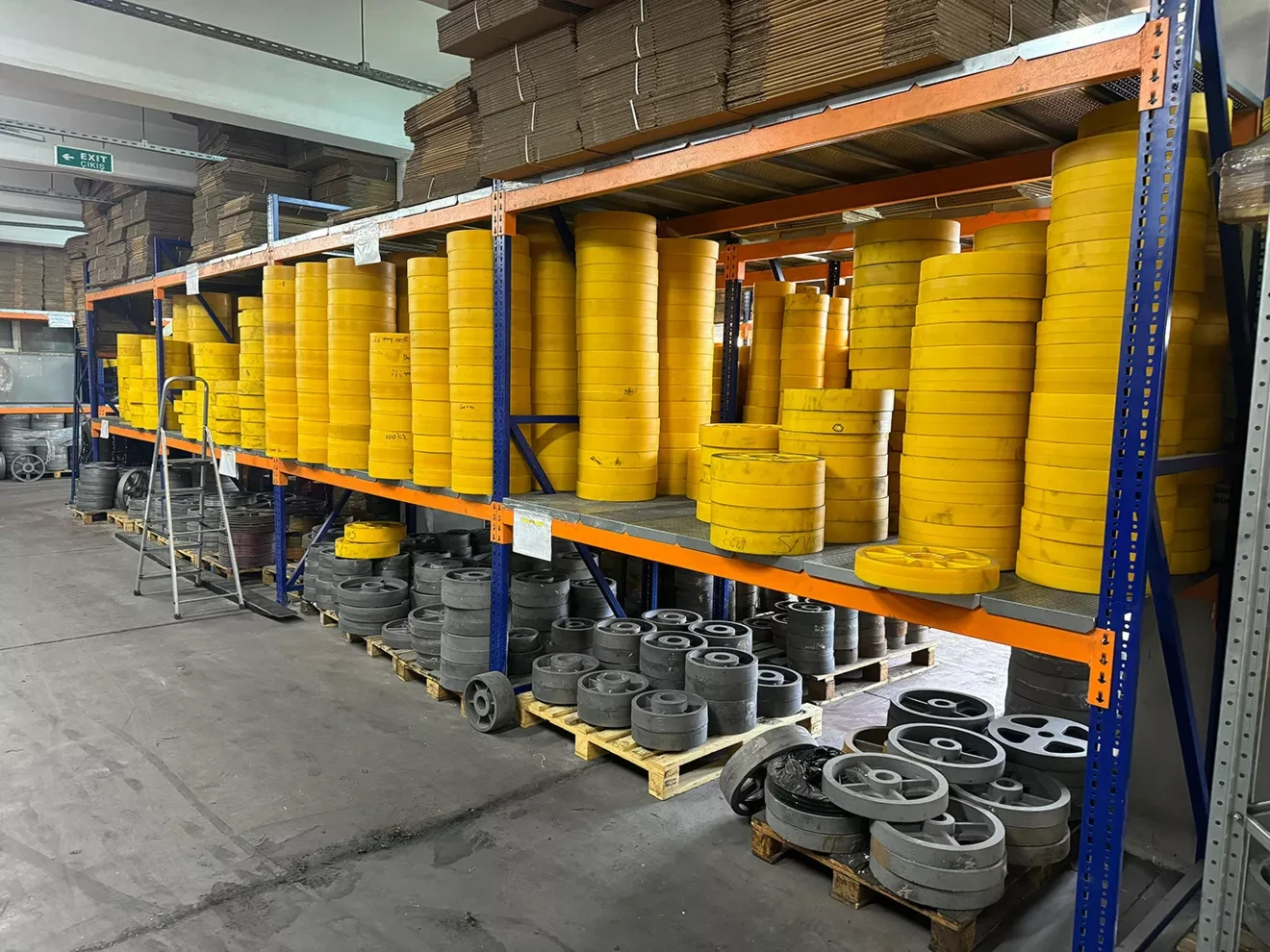
Why Should You Choose Artı Kasnak Hydraulic Pulleys?
It is no coincidence that we are the first choice of numerous elevator manufacturers and installation companies in the international market and throughout Türkiye. The key advantages that distinguish our hydraulic pulley solutions from those of our competitors and add value to your projects are as follows:
1. Metallurgical Solutions Suitable for Heavy Load Conditions (GG25, GGG50, and Special Kestamid)
Hydraulic elevators are generally used in high-capacity applications such as vehicle elevators, freight elevators, or stretcher elevators with heavy traffic. To counteract the crushing and wear effects that these heavy loads create on the pulley surface, we use high-quality GG25 gray cast iron or GGG50 ductile cast iron materials with much higher tensile strength. We also offer original MC Nylon alternatives with enhanced wear resistance for special projects seeking to reduce system weight and create a much quieter operating environment.
2. Vibration-Free Ride Comfort and Flawless Balance Management
Even the slightest vibration or jolt felt in the elevator car directly compromises user comfort and damages mechanical components. All our hydraulic pulleys are tested on precision electronic balancing machines after manufacturing. With their dynamic and static balance perfectly adjusted, our pulleys rotate at even the highest speeds without the slightest runout on the shaft. This allows the elevator to move as smoothly as if gliding on oil.
3. Double-Row Bearing Technology and Maximum Radial Strength
In hydraulic systems, the piston thrust places a very significant bending moment on the pulley shaft. Standard bearings begin to deform and make noise under this load within a short time, creating a risk of seizure. At Artı Kasnak, the hydraulic pulleys we manufacture use only double-row self-aligning ball bearings or cylindrical roller bearings suitable for heavy industrial conditions and with high load-carrying capacities. Thanks to our special bearing housing designs, we double the service life of the bearing.
4. International Standards and Full EN 81-20/50 Compliance
Safety is the one issue in the elevator industry on which no compromise can be made. Our manufacturing facility holds ISO 9001:2015 Quality Management System certification, and all hydraulic pulleys we manufacture fully comply with the safety factors, diameter ratios, and material hardness values specified in the European elevator standards EN 81-20 and EN 81-50. Every product is tracked using traceability codes.
Industry Flexibility: The Wide Range of Applications for Hydraulic Pulleys
Hydraulic elevator technology has found a place in a very broad architectural field due to its structural advantages and its ability to enable machine-room-less solutions. Our purpose-built hydraulic pulleys ensure the reliable operation of systems in the following areas:
Heavy Industry and Factory Freight Elevators:
High-capacity hydraulic systems used to transfer palletized loads weighing tons, raw materials, and industrial machinery between floors.
Automotive and Multi-Story Parking Solutions:
Large-diameter hydraulic pulleys designed for balanced load distribution and smooth starting and stopping processes in vehicle elevators.
Logistics Centers and Storage Areas:
Pulley assemblies with bearing mechanisms that withstand intensive operating schedules, continuous shock loads, and start-stop cycles.
Hospitals and Stretcher Elevators:
Special pulleys manufactured using Kestamid or precision casting technology, designed to operate with zero vibration and zero noise during patient transfers.
Villa and Low-Rise Residential Elevators:
Specially sized mini hydraulic pulley solutions for compact home-type hydraulic elevators with limited overhead shaft clearance.
The Mechanical Operating Anatomy of Hydraulic Elevator Pulleys
The integration and operating cycle of a hydraulic pulley within the system consist of flawless, sequential mechanical steps:
Power Input:
Pressurized oil from the hydraulic unit pushes the cylinder upward. The hydraulic pulley body mounted at the head of the cylinder is the first point to receive this linear movement.
Load Distribution and Guiding:
The steel ropes passing around the pulley are tensioned as the piston moves. The pulley grooves prevent the ropes from rubbing against one another, ensuring that each rope carries an equal amount of load.
Rotation Mechanism:
Thanks to the double-row bearings, the pulley begins rotating on the shaft with minimal frictional resistance. The flawless material and groove structure prevent the ropes from slipping on the pulley.
Safe Energy Transfer:
The linear hydraulic force is converted into speed and movement at a 1:2 ratio through the pulley and rope combination and transmitted to the elevator car. Under the control of the hydraulic valves, the car reaches the target floor smoothly.
Frequently Asked Questions
Traction pulleys are directly connected to the motor shaft and provide traction through friction. Hydraulic pulleys are guiding and redirecting elements moved by the lifting force of the piston; instead of motor torque, they are manufactured to withstand high radial loads.
GG25 gray cast iron, which has high wear resistance, is sufficient for low- and medium-capacity projects. For high-capacity freight and vehicle elevators, GGG50 ductile cast iron should be preferred because it is much more flexible and stronger against shock loads and breakage.
An incorrect pitch measurement causes the ropes to enter the pulley at an angle, rapidly wears the pulley sidewalls, and leads to humming noise during elevator travel. At Artı Kasnak, we guarantee 100% pitch compatibility.
It is sufficient to provide us with the outer diameter, number and diameter of ropes, pitch, and shaft dimensions of your old pulley. If you are unsure of the measurements, our technical team will design and manufacture a new high-performance hydraulic pulley that is 100% compatible with your existing system.